Kate Crawford et Vladan Joler
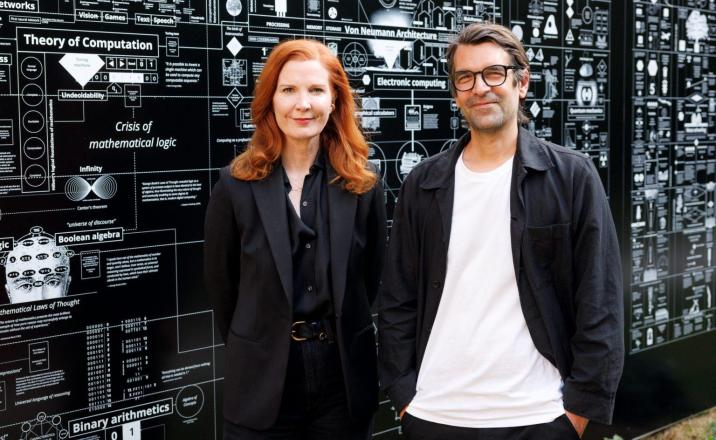
Kate Crawford is an internationally leading scholar of AI. She is a Professor at USC, a Senior Principal Researcher at MSR, and the inaugural visiting chair of AI and Justice at the École Normale Supérieure. Her award-winning book, Atlas of AI, was named a best book of the year by The Financial Times, won three international prizes, and has been translated into fourteen languages. Beyond her scholarly work, she is an award-winning artist whose work explores the themes of technology, history, and power. Her artworks have been shown in over 100 museums worldwide, including the KW Institute, Jeu de Paume, Fondazione Prada, and Mori Museum, and are in the permanent collections of MoMA, the V&A, Rijksmuseum Twenthe, among others. Her latest work with Vladan Joler, Calculating Empires, won the Silver Lion at the Venice Architecture Biennale 2025, the Grand Prize of the European Commission for art and technology, and the Boghossian Art Prize. TIME100 named Crawford as one of the world’s most influential people in AI.
Vladan Joler is an academic, researcher and artist whose work blends critical design, data investigations, counter-cartography, investigative journalism, writing, data visualization, and other disciplines. He explores different technical and social aspects of algorithmic transparency, digital labour exploitation, invisible infrastructures and other contemporary phenomena in the intersection between technology and society. His work has been exhibited in more than a hundred international exhibitions. His work is included in the permanent collections of the Museum of Modern Art (MoMA), the V&A Museum, the Design Museum in London, the Ars Electronica Center, and the Rijksmuseum Twenthe. In 2018, together with Kate Crawford, they created Anatomy of an AI System, a large-scale map and long-form essay investigating the human labor, data and planetary resources required to build and operate an Amazon Echo device. Other studies that he authored, published in recent years by the independent research collective SHARE Lab, included research on information warfare, metadata analysis, browsing history exploitation, surveillance, and Internet architecture.